An ayahuasca dark night of the soul is a ceremony that turns frightening, hopeless or physically brutal. Grief or terror can rise, and you may feel you’re dying or losing your mind. Your body may purge again and again. It feels like it will never end. It does. By our own ceremony clock, a cup’s effects fade within 4 to 6 hours.
A dark night has causes you can name. When the Global Ayahuasca Survey asked drinkers about side effects, 69.9% listed at least 1 physical adverse effect, with vomiting or nausea at the top. Some of the darkness is what you carry in. Some is set before you drink: your body, your medications, your sleep, the dose and the people around you.
Since 2017, our healers have led more than 650 ceremonies in our maloca by the Río Momón. Today a ceremony here has 10 guests or fewer and 5 staff: 3 healers plus 2 facilitators.
What is an ayahuasca dark night of the soul?
It’s a ceremony that turns frightening or despairing, and researchers have a way to measure it.
An ayahuasca dark night of the soul is a ceremony in which fear, grief or physical misery takes over for hours. Researchers call it a challenging experience and score it on 7 parts: grief, fear, a sense of dying, fear of going insane, isolation, physical distress and paranoia. The worst of it ends as the cup wears off.
The questionnaire behind those 7 parts has 26 items. It was built for psilocybin in a 2016 study and has since been used with ayahuasca drinkers in Brazil and the Netherlands.
A dark night can be any mix of the 7. It might be grief for a parent, hours of nausea and cold, or the certainty that you’ve gone mad for good. A medical emergency or a psychotic break is something else. Those need a physician, not more time on the mat.
Why does ayahuasca go dark?
We sort the causes of a dark night into 7 roots. You can’t change some of them. Others are settled before you drink.
| Root | What it feels like | What the evidence says | Who controls it | What changes it |
|---|---|---|---|---|
| What you brought | Grief, old memories, rage or fear rising | A psychologist at ICEERS, a nonprofit that studies ayahuasca, says that in his experience, what a bad night brings up was almost always present in the person’s life before | Nobody, and it’s often why you came | People beside you while it comes up |
| Your body that night | Purging, cramps and chills; exhaustion that feels like despair | In a survey published in 2022, 69.9% reported at least 1 physical adverse effect; vomiting or nausea was the most common, at 62.0% | Partly you | Preparation. In our experience, purging eases with each ceremony |
| What’s in your system | Agitation, a racing heart, sweating; a night that feels wrong rather than hard | The vine blocks the enzyme MAO-A, so antidepressants and some other drugs can interact with it | You and the people who screen you | A supervised taper and an honest medical form |
| How tired you are | Low reserves; hard to settle | No research yet, as far as we know. Guests who take a red-eye and start the retreat the same day arrive exhausted | You and the center’s schedule | At least 1 full day in Iquitos first; rest nights between ceremonies |
| The dose | Too much, too fast | In a 2018 study that began with 654 people, higher doses intensified every part of the experience | The healer | 40 to 60 ml at the first ceremony; roughly 1 second-cup request in 5 refused |
| The room | Alone in the dark with nobody checking | Better-rated settings went with fewer challenging experiences in 2,751 drinkers (2022 study) | The center you choose | Who’s within arm’s reach, and the number of guests sharing them (group size untested) |
| Something medical underneath | A body or mind in trouble, not a hard night | Our records: 6 to 8 physician call-outs handled on site, plus 2 evacuations in 9 years | Screening, then the physician | Raise your hand. Staff take it from there |
The 3rd row is the highest-stakes mistake guests make. The vine blocks MAO-A, which normally breaks down serotonin and similar chemicals. A serotonin drug still in your system can then push the night somewhere dangerous. If you take an SSRI or SNRI, your taper has to end at least 6 weeks before your first ceremony, or at least 8 weeks for fluoxetine. Your prescriber and our medical director both oversee it. The timeline for each drug is in our medication guide.
The 4th row gets the least attention. Guests who take an overnight flight and start the retreat the same day arrive with nothing in reserve. We ask everyone to reach Iquitos at least 1 full day before the retreat begins. Our 4 ceremonies fall on the 2nd, 4th, 7th and 9th nights, never 2 in a row.
Does healing require a dark night? What the research says in 2026
Not on the evidence so far. A hard night can lead somewhere good, but the research doesn’t show that harder nights heal more.
Some people describe going from dark to light. A 2009 study of written accounts from 25 Northern European drinkers found 6 themes. 2 of them were a frightening, closing-in state and a sudden change in the experience.
But when researchers asked 231 ayahuasca drinkers about their hardest moments and their growth afterward, harder experiences went with only slightly more growth. The link was small enough to be chance (p = .076). In the same 2024 study, a history of childhood trauma didn’t predict harder experiences (r = .080).
What people bring in also predicts how the night goes. A 2018 study began with 654 people and followed them before and after a psychedelic they had chosen to take. Most took LSD or psilocybin, and ayahuasca came third, at about 1 in 9. A positive frame of mind going in lowered the odds of a challenging experience. Higher doses made every part of the experience stronger.
How the 3 studies compare:
| Study | Who was studied | Main finding | What it can’t prove |
|---|---|---|---|
| Journal of Psychoactive Drugs, 2009 | Written accounts from 25 Northern European drinkers | A frightening, closing-in state and a sudden change were 2 of 6 themes | How common each theme is, or if one leads to the other |
| Frontiers in Pharmacology, 2018 | 654 people at the start, mostly on LSD or psilocybin | A positive mindset lowered the odds of a hard experience; higher doses intensified every part | Ayahuasca’s effect alone, since about 1 in 9 took it |
| Drug Science, Policy and Law, 2024 | 231 ayahuasca drinkers | Harder experiences went with only slightly more growth, possibly by chance (p = .076); childhood trauma didn’t predict harder nights | Cause and effect; it’s a survey |
The 2018 and 2024 studies are surveys, and with a p-value of .076, a small link between hardship and growth can’t be ruled out. Read them as hints, not proof. They don’t make a dark night worthless, either. In the survey behind that 69.9% figure, most respondents with hard after-effects later counted them as growth. The point is narrower: the research doesn’t show darkness is required.
That’s why we don’t tell anyone to throw themselves into terror. A dark night can mean something. It isn’t a test you have to pass.
The room is part of the night
Where you drink and who sits near you are linked to how dark a night gets. A 2022 study of ayahuasca settings points that way, with limits worth knowing.
Researchers surveyed 2,751 experienced drinkers in Brazil and the Netherlands, from 2 Brazilian churches and from neo-shamanic groups. Every part of the setting they rated went with fewer challenging experiences. The social side, meaning the people in the room, predicted fewer challenges in all 3 groups. In the neo-shamanic groups, the closest match to a retreat, people’s rating of the ceremony’s leaders mattered too.
Now the limits. The study recruited in Brazil and the Netherlands, not at Peruvian retreats. About half the people in it had drunk more than 100 times, and a survey like this shows links, not causes. It didn’t test group size. And 1 finding cuts against centers like ours. The survey behind that 69.9% figure tied church ceremonies to fewer mental health after-effects than any other setting, traditional shamanic ceremonies included.
My own first ceremony, in 2013, went dark at a big center outside Iquitos. We were 25 guests, and nobody introduced me to the 2 healers. I was purging within 40 minutes. Then I lay for about 4 hours in what I can only call a dark room inside a dark room. Nobody came to my mat. The medicine made that night hard. The room made it lonely. It’s why I’d put these questions to any center before booking.
Today no ceremony here goes above 10 guests, 5 staff are in the room, and someone is always within arm’s reach of every mat. No study we know of has tested group size, so this is our choice, not a finding.
What our lead healer does before and after a dark night
He reads each guest before serving and adjusts the dose after a hard night. Sometimes he decides a guest shouldn’t drink that night at all.
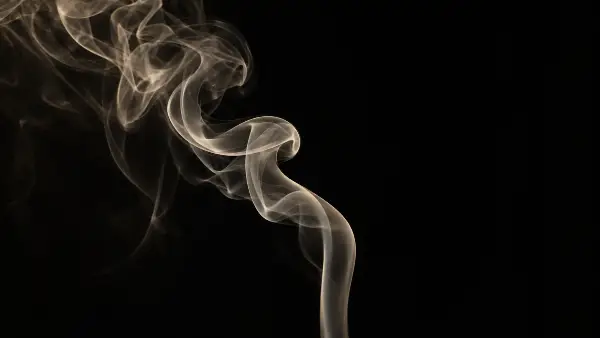
Before pouring, he spends about 45 seconds blowing tobacco smoke over each guest. He says he’s reading the guest’s aire, their energy field. What he reads helps set the first cup: at their first ceremony, most guests get 40 to 60 ml.
He has stopped at that point and refused to serve a guest 3 times, each at the guest’s first ceremony. All 3 had traveled thousands of miles and prepared for weeks, then watched the room drink without them. Each drank at a later ceremony.
Guests can request a second cup about 90 minutes in. He says no to roughly 20% of the people who ask, usually because they’re already far into the experience and don’t need more. After a night that overwhelms someone, he usually keeps their next dose the same or lowers it.
Across all our retreats, guests skip 5 to 8% of the ceremonies open to them, mostly after the 2nd or 3rd. Sometimes he’s the one who asks them to.
When a dark night is an emergency
Treat it as an emergency when the signs point to a medical problem rather than a hard night, such as chest pain, trouble breathing or panic that won’t ease. Then you need a facilitator and a physician, not more surrender.
Our staff act on any 1 of these signs:
- Chest pain or pressure
- A racing heart that won’t settle
- Trouble breathing
- Heavy sweating with shaking or agitation
- Panic that won’t ease
- Not responding when spoken to
- Not knowing where you are
Put your hand up and the nearest facilitator comes to you; the ceremony rules cover what happens next. Our medical director is a physician. She stays awake on site through each ceremony night and can reach any mat within 2 to 3 minutes of a facilitator’s radio call. Since she joined in 2018, staff have called her to a mat on 6 to 8 occasions, and the team managed each one on site. In 9 years, 2 guests have been evacuated to hospital, and each made a full recovery. How our staff tell dread from an emergency is a post of its own.
Where the phrase “dark night of the soul” comes from
It comes from a poem by a Spanish mystic and poet of the 1500s, probably written between 1577 and 1579. In his writing, the dark night is a long stage of spiritual purification, not a single bad night.
Today people use the phrase for any long, painful stretch of life, or for a crisis of faith. In ayahuasca circles it covers 3 timescales, and each one needs different help.
| Timescale | What people mean | What helps |
|---|---|---|
| 1 night | A ceremony that turns frightening or hopeless | The people beside you, the healer’s songs, and telling staff before the next ceremony |
| The weeks after | Tears, rawness, feeling cut off once you’re home | Rest, people who’ve been through it, and your therapist, if you see one |
| Months | Hopelessness or distress that doesn’t ease | Professional help, not another ceremony |
If home feels heavier than the ceremony did, the weeks after come with their own warning signs. If a dark stretch brings thoughts of ending your life or hurting yourself, get help that day. Phone your local emergency line, or in the United States, call or text 988.
Before your next ceremony
Tell the healers what happened before you drink again. Skipping the next ceremony is also an option.
Our head facilitator tells guests who are scared before they arrive: “Your fear is intelligent… It means you are taking this seriously.” After a hard night, treat your fear the same way. It’s information for the healer, and sitting out is allowed.
At the morning circle or in your consultation with a healer, say what the night was made of: your body, a memory, or the fear of losing your mind. Say when it peaked, too. That’s what tells the healer whether to hold your dose, lower it, or suggest a night off.
We’ll add the same 26-item questionnaire researchers use to the Day-10 survey every guest already fills in. It will sit alongside the depression and trauma scores we already publish. Guests will also rate each ceremony the next morning. We aim to publish first results in 2027, including whether harder nights here go with better or worse scores 3 months later.
An ayahuasca dark night of the soul is real, and for some people it becomes the night that matters most. It isn’t required, and part of it is set before the first cup. If you’re deciding whether to come, the ayahuasca retreat page sets out how the nights run, and our services page lists what’s included. If you have questions first, write to us.
FAQs
What does an ayahuasca dark night of the soul feel like?
It can feel like grief, terror, loneliness, or a sense that you’re dying or going mad. For some people it’s mostly nausea and chills. Researchers sort these feelings into 7 parts. 69.9% of people in a survey published in 2022 reported at least 1 physical adverse effect, most often vomiting or nausea.
How long does an ayahuasca dark night of the soul last?
The night itself lasts hours, not days. In a 2003 lab study of freeze-dried ayahuasca in capsules, effects were strongest 90 to 120 minutes after the dose. On our own ceremony clock, a cup wears off within 4 to 6 hours. Distress that lasts for weeks after you get home is a different problem, and it needs support.
Do harder ayahuasca nights lead to more growth?
Not in the research so far. A 2024 study asked 231 drinkers about their hardest moments and their growth afterward. Harder experiences went with only slightly more growth, and the link may be chance. A hard night can still mean something, but healing doesn’t require one.
Why do some people have a dark night and others don’t?
Your body, your medications, your sleep, the dose, the room and what you bring in all play a part. In a 2022 study of 2,751 drinkers, people who rated their setting better had fewer hard experiences. A 2018 study that began with 654 people found that a positive mindset going in lowered the odds.
Can you stop a bad ayahuasca experience once it starts?
You can’t switch it off, but you don’t have to face it alone. Raise a hand and the closest facilitator will come to you. A healer can also sing to you. If the trouble is physical, like chest pain or a racing heart, or panic won’t ease, our physician checks you and treats it.
Does childhood trauma make a dark night more likely?
Not in a 2024 study that tested it. Among 231 drinkers, people with childhood trauma were no more likely to have hard experiences (r = .080). Trauma can still come up in ceremony. That’s why we screen every applicant and keep someone within arm’s reach of every mat.
Should I drink again after a dark night?
Talk to the healers first. After an overwhelming night, our lead healer usually keeps your dose the same or lowers it. You can also sit out any ceremony. Guests pass on 5 to 8% of their ceremony nights, usually after the 2nd or 3rd ceremony.