01
Maestro Rono Meni
From Paoyhan, a Shipibo community on the Ucayali, with 31 years singing ceremonies. Our senior maestro: he leads nights 2 and 7, the first and last ceremonies of every week, and sets the pace for the other singers.
End of the Zungarococha road · San Juan Bautista, Loreto · About 115 m
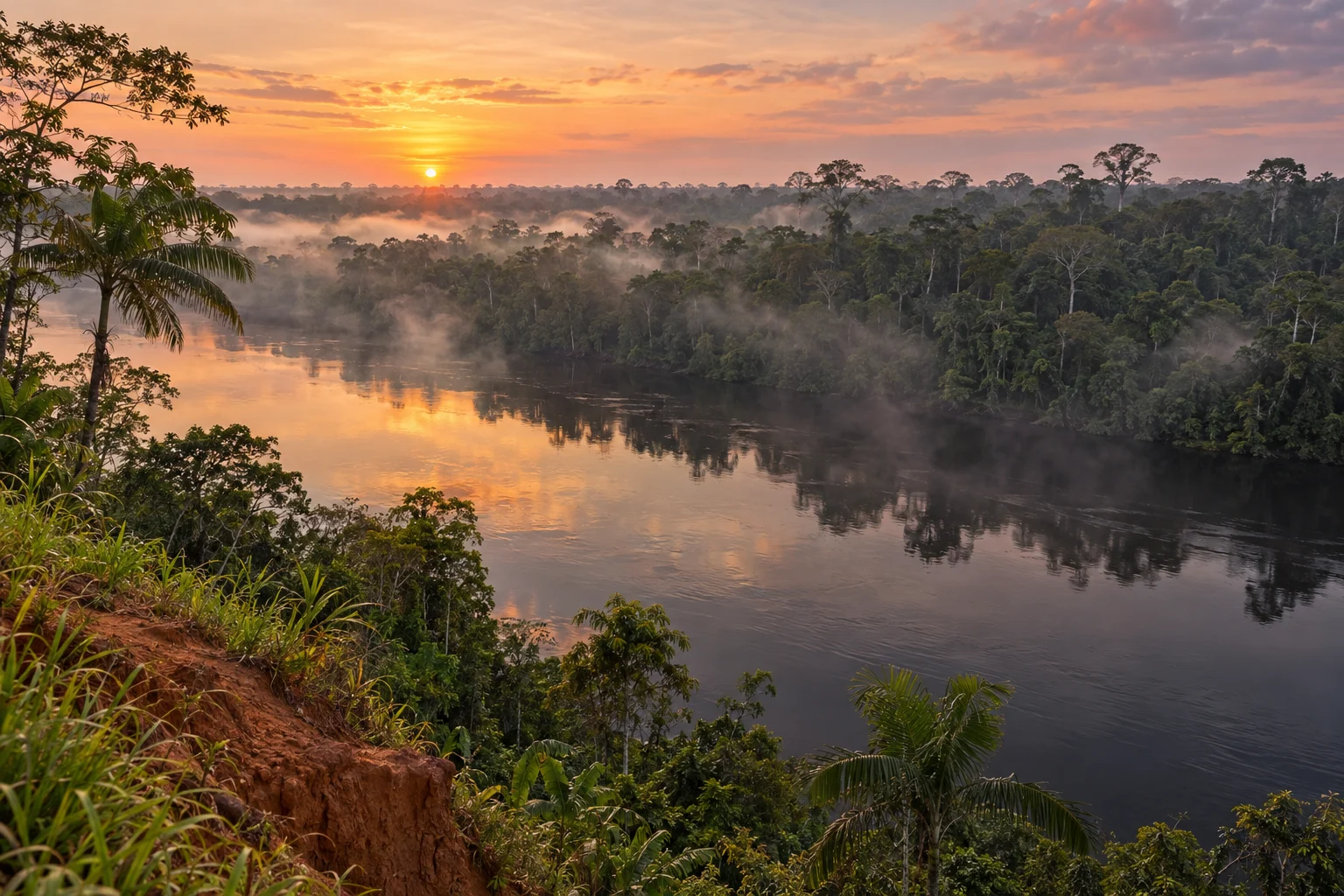
Llanchama is the last village on the Zungarococha road, on the left bank of the blackwater Nanay, with the Allpahuayo-Mishana reserve on the far bank. Our ayahuasca retreat center in Llanchama sits on the terrace above the river where the road ends: 12 guests a week, 4 ceremonies sung by Shipibo maestros, a physician awake in the maloca on each of those nights, and about 40 minutes from Iquitos airport with no boat.
Guests per retreat, never more, each in a room of their own.
From Iquitos airport. Road the whole way, to where the road stops.
Applications declined, with the reason in writing.
Months of integration, included in the price.
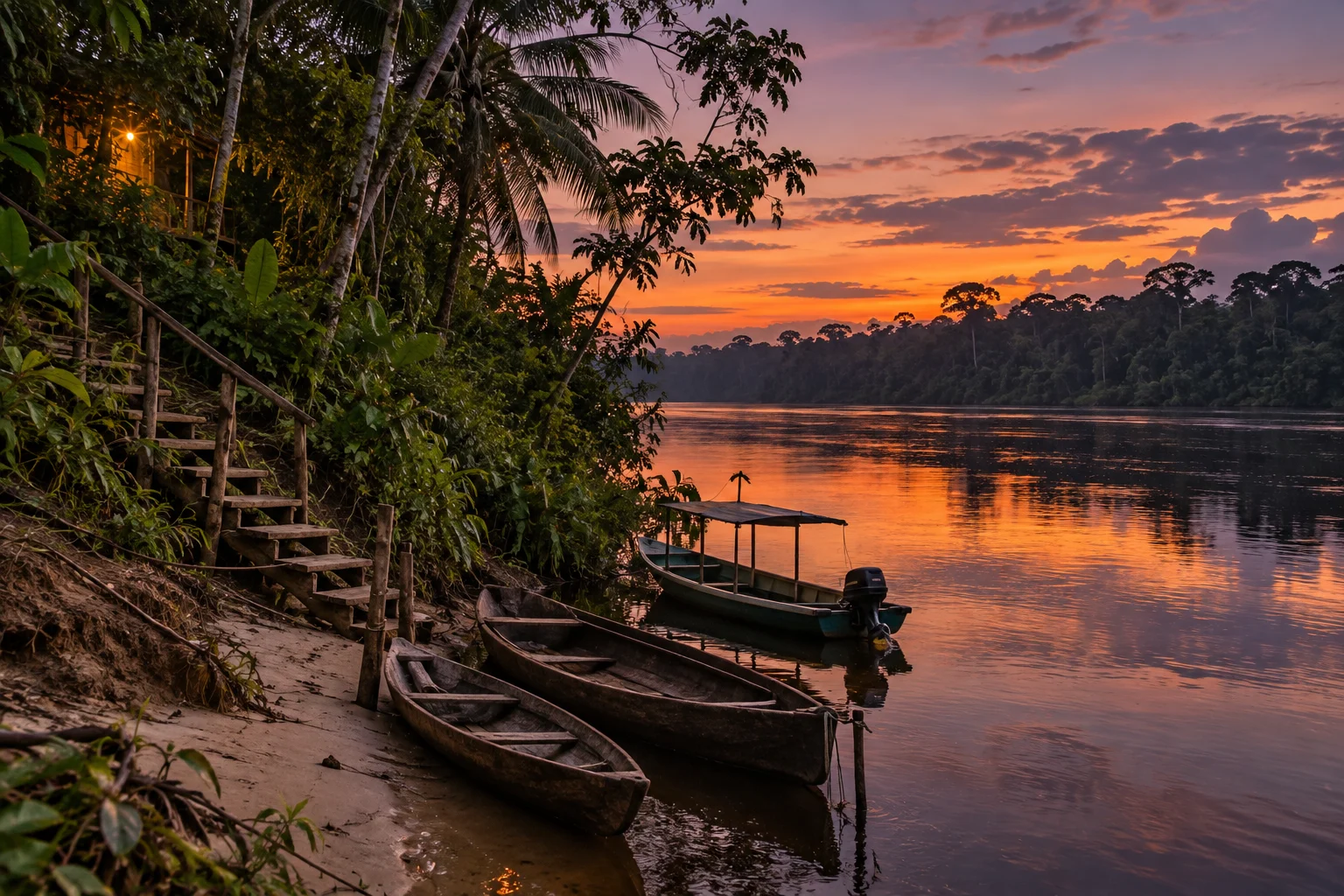
Every road house we run around Iquitos trades some quiet for the hospital number, and every river house trades the hospital number for quiet. Llanchama is where the trade is kindest. The village is the last one on the Zungarococha road, on the left bank of the Nanay upstream of everything: no through traffic because there is nothing to go through to, a small village that goes to bed early, and a national reserve on the far bank with no one in it. Our ayahuasca retreat center sits on the terrace above the river beyond the village, where the road ends and our track begins.
The Nanay here is blackwater, upstream of the city and as clean as it gets, and the clay of the terrace grows the vine well. The village is named for the llanchama tree, whose bark the Bora and Witoto beat into painted cloth far downriver on the Ampiyacu – a tradition that is theirs, not this village’s and not ours. Our maestros are Shipibo, from Ucayali, and we say so.
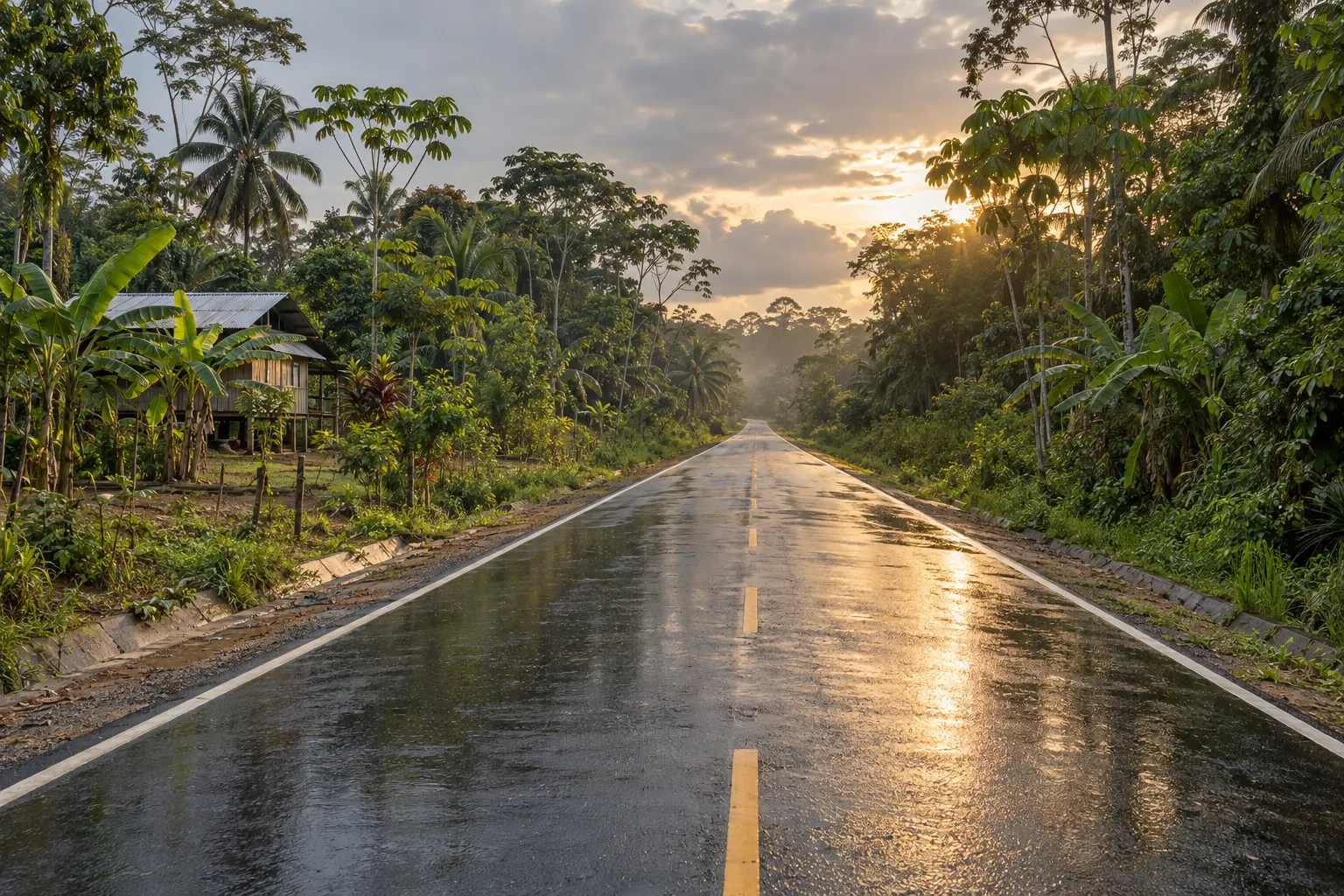
40 minutes from the terminal on the Zungarococha road, asphalted in 2026, with the last 3 on our own track. Luggage, groceries, guests and – if it ever mattered – an ambulance all move on the same road, whatever the river is doing.
From the terrace you look straight at Allpahuayo-Mishana: 58,069 hectares of the best studied white-sand and floodplain forest in the world. No lights, no road, no one. It is the view for the week, not an excursion in it.
50 minutes to a city hospital in Iquitos on a road that does not flood, versus an hour or more by launch from any river site. We give you the number so you can compare it, not so you can feel reassured by it.
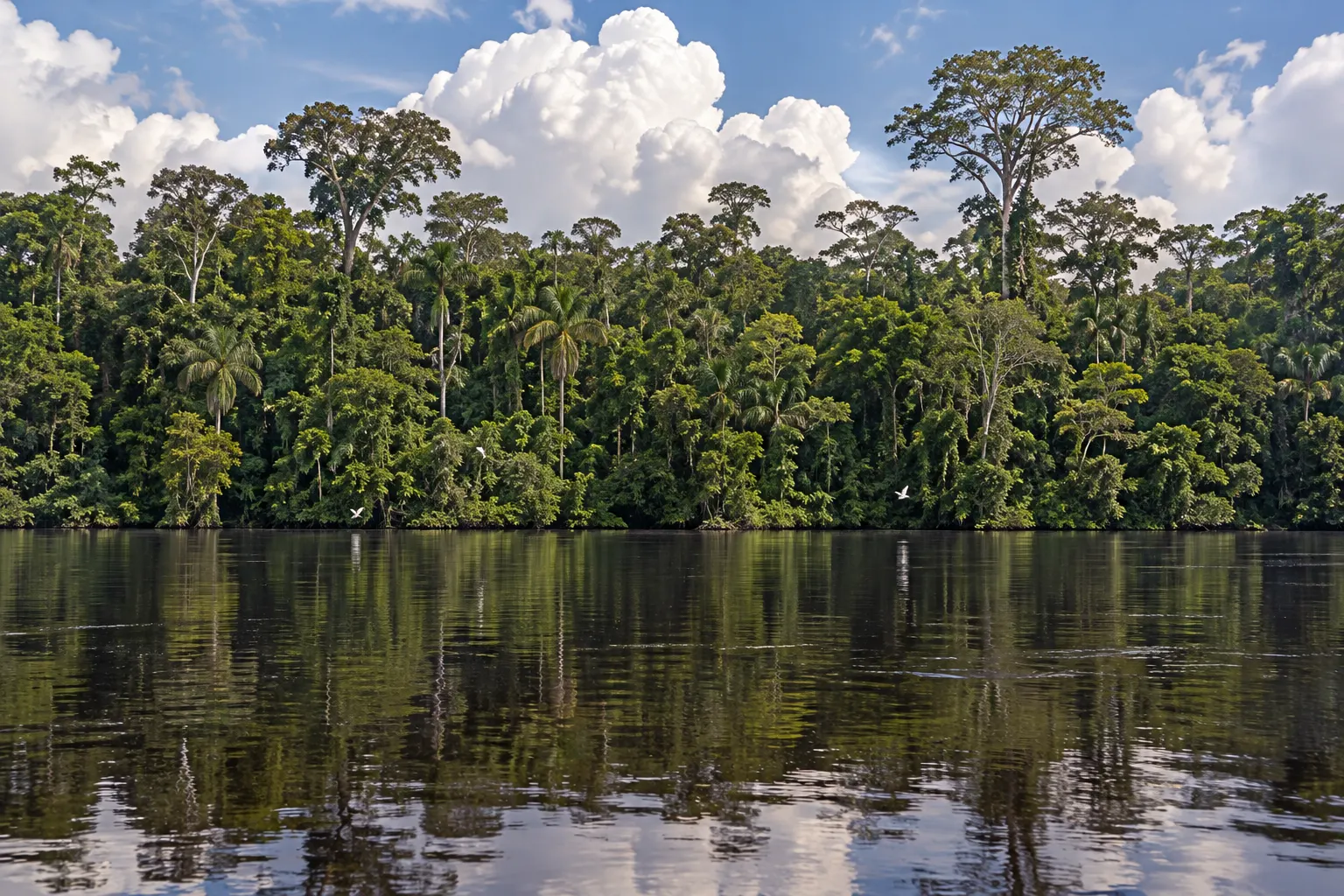
We will not sell you llanchama bark paintings as the craft of this village, we will not call the terrace “the gateway to the reserve” and run you through it between ceremonies, and we will not describe 50 minutes to a hospital as “close”. Llanchama is a small river village of farmers and fishermen with no ceremonial tradition for us to borrow, and we will not import one. If the reserve itself is why you are coming to Loreto, hire a guide at the Mishana ranger post for the days before your week, and come to us afterwards for 7 nights that have nothing to do with birds.
02 · Getting here
Iquitos has no road to the rest of Peru, so everyone flies. From the terminal, a few minutes south on the Iquitos-Nauta highway, then the Zungarococha road past the university and out through farms and secondary forest until it meets the Nanay at Llanchama and gives up. Nothing in the journey floats.
Land in Lima. International arrivals connect the same day. If your flight lands late, sleep in Lima rather than chasing the last connection – the week should not start with a sprint.
The 1 flight. Several direct departures daily. The Andes fall away and there is nothing but green and brown water for the last half hour; the dark river curling in from the west before you land is the Nanay, and the property is 40 minutes up it.
Collected at the terminal. South on the Iquitos-Nauta highway to the turnoff for the Zungarococha road, the only road on the Nanay side of the city. You never see downtown Iquitos unless you ask to.
The Zungarococha road. Past the university campus at Zungarococha, the lake, and the river landing at Puerto Almendra, through secondary forest and small farms, with the reserve boundary off to your right. The road was resurfaced with asphalt in 2026. Through the village, past the last house, and 3 minutes of our own track to the terrace.
Settled before dinner. Intake with the physician, an introduction to your integration lead, and an early night with the river below the window and the reserve dark across it. Nobody does anything else on day 1.
No acclimatization days needed. Nothing to adjust to but heat, so the first ceremony lands on night 2, with a physician awake in the maloca until dawn.
About 50 minutes by road to a city hospital in Iquitos, a city of nearly half a million – no launch, no crossing, no river conditions in the chain. It is the longest road-only number we publish around Iquitos, level with Nueva Esperanza on the highway and about 5 minutes more than Puerto Almendra 1 village back down this road, and still shorter and more weather-proof than any boat run. The 2026 asphalt holds the number in every month, and we have never needed a boat. We publish this figure for every house because it is the one that matters.
Llanchama, in the San Juan Bautista district of Maynas, Loreto, at the end of the Zungarococha road on the left bank of the Nanay, around 3°51′30″ S, 73°24′47″ W and about 115 m above sea level. Open in Google Maps
Ayahuasca is the week. Kambo and Bufo are offered only to guests who are separately cleared and who ask, and neither costs extra – because charging for them would give us a reason to recommend them.
5 to 6 hours, dusk to dawn, 12 guests and 2 maestros.
A brew of caapi vine and chacruna from our own chacra on the terrace, cut within an hour of the maloca and cooked on site by the maestros who serve it, drunk in the dark while they sing almost continuously. 4 ceremonies with rest nights between them.
20 to 40 minutes, fully conscious, on a rest day.
A frog secretion applied to small superficial burns on the skin. Not psychoactive, unpleasant by design, and always at least 24 hours from a ceremony. We measure your water rather than loading it.
15 to 20 minutes most people cannot describe afterwards.
Synthetically sourced 5-MeO-DMT, 1 to 1, only on the morning after the final ceremony, and only when the physician and your integration lead agree independently. Most first time guests are asked to wait.
With no altitude and 40 minutes of road from the terminal, nothing about the calendar is spent recovering from the journey. The week keeps its rest days anyway – the night after a ceremony is when most guests actually make sense of it.
Collected from Iquitos airport, 40 minutes to the end of the road. Intake with the physician, an introduction to your integration lead, and an early night.
A swim from the landing at first light, with the reserve still in mist across the water, then a plant bath in the afternoon and blood pressure checked. The first ceremony runs that night from 9 until first light, with a physician awake in the maloca until dawn.
No screens, 1 meal, a conversation with your integration lead if you want one. Most guests sleep until mid morning.
Usually the night guests describe afterwards. The maestros have watched you for 2 nights and adjust per person.
A slow walk through the chacra and along the terrace path upstream before the day warms, for guests who want it – the hour the oropendolas are loudest – and the landing at dusk for everyone else. Kambo runs the same morning for guests who are separately cleared. No ceremony that night.
Most weeks this is the quietest one. The room knows itself and the maestros work with less noise.
Guests frequently say this is where the previous 3 finally made sense. The maestros close at first light.
Bufo only where both leads agree, never on a travel morning – guests taking it stay a further night. Everyone else is at the airport in well under an hour.
Arrive the day before your week begins if connections are tight, book the afternoon departure on day 8 rather than the morning one, and keep the 2 days after you land at home completely empty. If you want the reserve and its birds, book a guide through the Mishana ranger post for the days before you come to us, not the days after.
Shipibo maestros from Ucayali communities, a physician on site every ceremony night, and an integration lead who stays with you for a year. Everyone who touches your week is named here, in writing, before you pay. No one from Llanchama works in our maloca; it is a farming and fishing village, and we would rather say that than imply a lineage that does not exist.
From Paoyhan, a Shipibo community on the Ucayali, with 31 years singing ceremonies. Our senior maestro: he leads nights 2 and 7, the first and last ceremonies of every week, and sets the pace for the other singers.
From Nueva Betania, also on the Ucayali, with 26 years of practice. She works with the plant baths and the dieta alongside ceremony, and sings on all 4 nights.
From Paoyhan, with 19 years of practice. Second maestro in most ceremonies, and the one guests tend to find on the terrace path at dawn when they need to talk the night through.
Internal medicine, based in Iquitos. Reads every application, runs intake, and stays awake through all 4 ceremonies. Named to you in writing before you are asked for anything.
06 · Before you get excited
We make no medical claims. Ayahuasca is not a cure for any condition, and guests who arrive expecting one tend to leave disappointed and occasionally worse.
It is the longest road-only hospital number we publish around Iquitos, level with Nueva Esperanza. It is shorter than any boat run, it does not change with the river, and a physician is awake in the maloca every ceremony night. If a shorter chain matters more to you than the quiet, our Quistococha house is about 35 minutes from the same hospital.
The village is named for the llanchama tree, whose inner bark the Bora and Witoto of the Ampiyacu beat and paint. That craft is theirs, made in Pucaurquillo, not in this village. Anyone selling you “Llanchama tradition” alongside a ceremony is selling you a name.
Allpahuayo-Mishana is the view from the terrace for 7 nights, and that is all. The ranger post at Mishana, the trails and the endemic birds are for the days before you arrive, with a guide, not the 2 days after your last ceremony.
The Zungarococha road was resurfaced in 2026, and the last 3 minutes to the terrace are still our own earth track. Around 31°C, humid in every month, rain without notice, and dengue is seasonal across Loreto. Rooms are screened and nets are up.
Screening takes about 2 weeks and the dieta takes 3 more, and the 7 nights sit inside about 4 months of work, most of it at home. If you want to sit in 4 weeks, we are the wrong center.
The Zungarococha road serves 3 of our houses before it ends at Llanchama, all on the same protocol, the same pay standard and the same 12 guest limit. They differ in how quiet the nights are and how long the drive to a hospital is – and we would rather move you between them than sell you the one you clicked on first.
| Llanchama · this page | Puerto Almendra | Zungarococha | |
|---|---|---|---|
| From the airport | About 40 minutes, road the whole way | About 35 minutes, road the whole way | About 20 minutes, road the whole way |
| To a hospital | About 50 minutes by road | About 45 minutes by road | About 40 minutes by road |
| The water | The blackwater Nanay below the terrace, the reserve opposite, swimmable | The Nanay, from a riverbank beside the village | A blackwater lake fed by the Nanay |
| Next door | Nothing. The road ends here, and the far bank is a reserve | A river village and 1,200 ha of university forest | A lake village and the university campus |
| Choose it for | The quietest nights of the 3, at the end of the road | More forest at the gate, 5 minutes closer to town | Still water and the shortest drive of the 3 |
If real river silence matters more than a road, Padre Cocha and Manacamiri are villages across the Nanay with no road at all, reached by boat from the port at Bellavista-Nanay. Santa Clara de Nanay puts a dry-season beach in front of the village, and Rumococha is a lake house with a short canoe crossing. On the highway south of the city, Quistococha, Varillal and Nueva Esperanza are all reached by road.
08 · Price
$5,800 covers the whole thing, including the year afterwards. Nothing is upsold once you are here, the optional medicines cost nothing extra, and being declined for 1 of them changes nothing about what you paid.
Nothing is charged until a physician confirms your place. Payment plans run over 3 or 6 months once a place is offered. Flights and travel insurance are not included, and we recommend insurance that covers trip cancellation on medical grounds – because sometimes the medical grounds are ours.
09 · Questions
No charge to apply · reviewed within 48 hours
Who reads my medical file, how far is the nearest hospital, how are the healers paid, and how often do you say no. Ask us in writing, then ask everyone else you are considering. We are comfortable being compared on those answers.