Padre Cocha, Punchana, Iquitos · About 100 m · Twelve guests
Ayahuasca Retreat Center In Padre Cocha
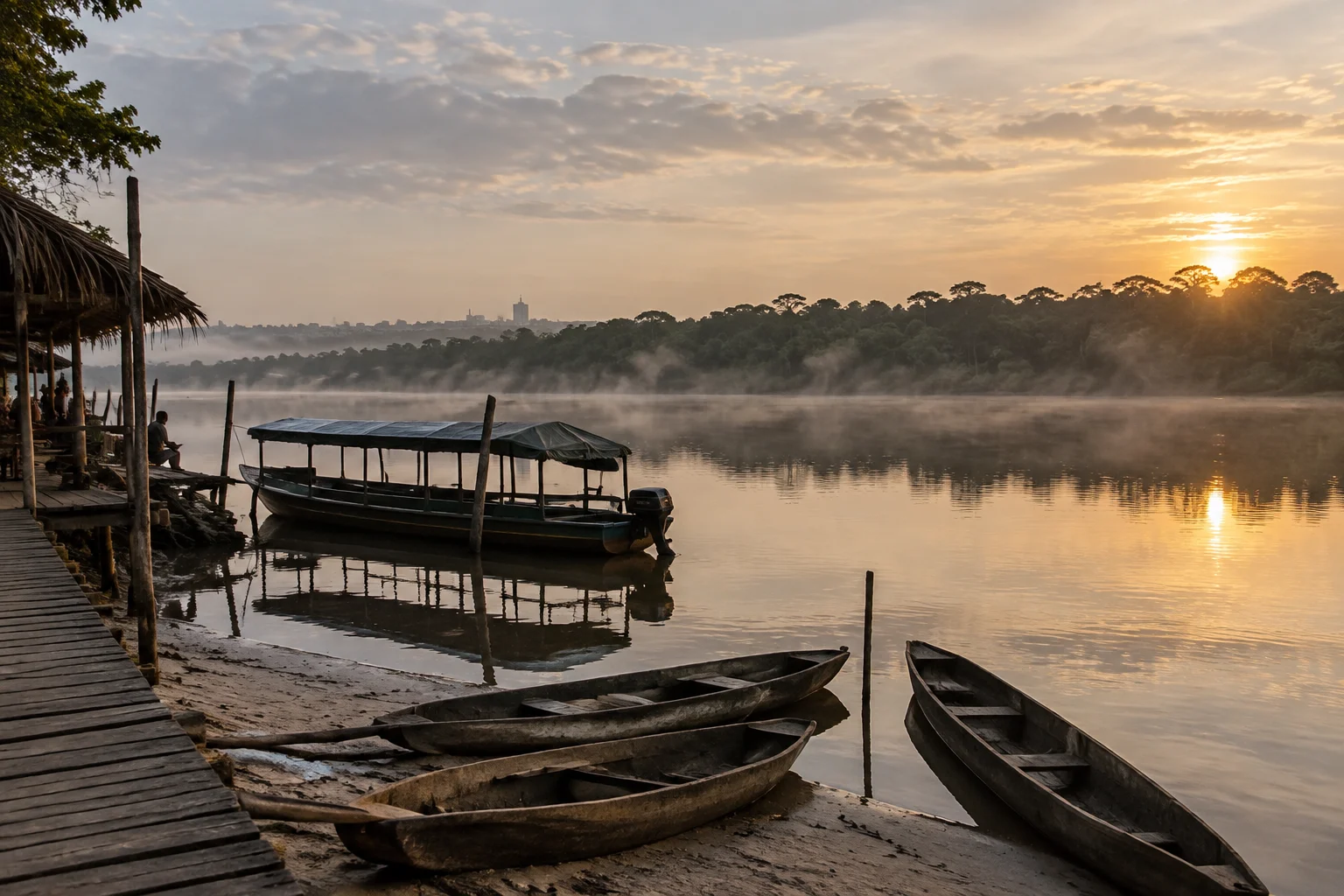
Our ayahuasca retreat center sits in the forest beyond Padre Cocha, a Kukama village on the far bank of the Nanay, fifteen to twenty minutes by covered launch from the Bellavista-Nanay port in Iquitos. Four ceremonies over seven nights with Shipibo maestros, a physician awake in the maloca every night, and the river between you and the city.
Guests per retreat, never more.
By launch from the Bellavista-Nanay port.
Applications declined, with the reason in writing.
Months of integration, included in the price.
Why an ayahuasca retreat center in Padre Cocha, and not in the city
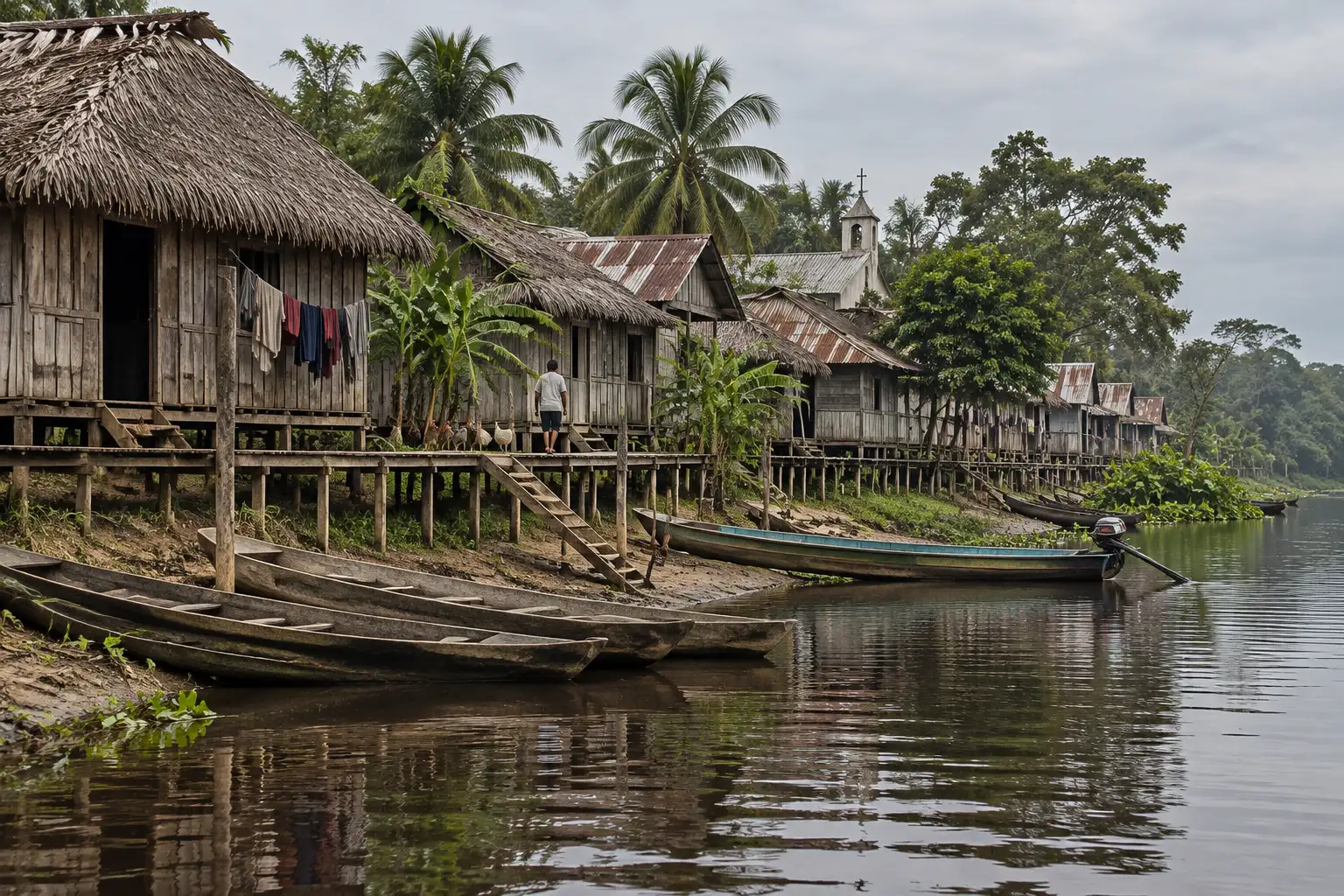
Stand on the ramp at Bellavista-Nanay and Padre Cocha is right there across the Nanay: a line of houses on stilts, a church roof, boats pulled up on the bank. No bridge, no road, and none coming. Every person and every sack of rice crosses by launch, fifteen to twenty minutes of dark water from the port. That short crossing does something a road never can: it ends the city cleanly.
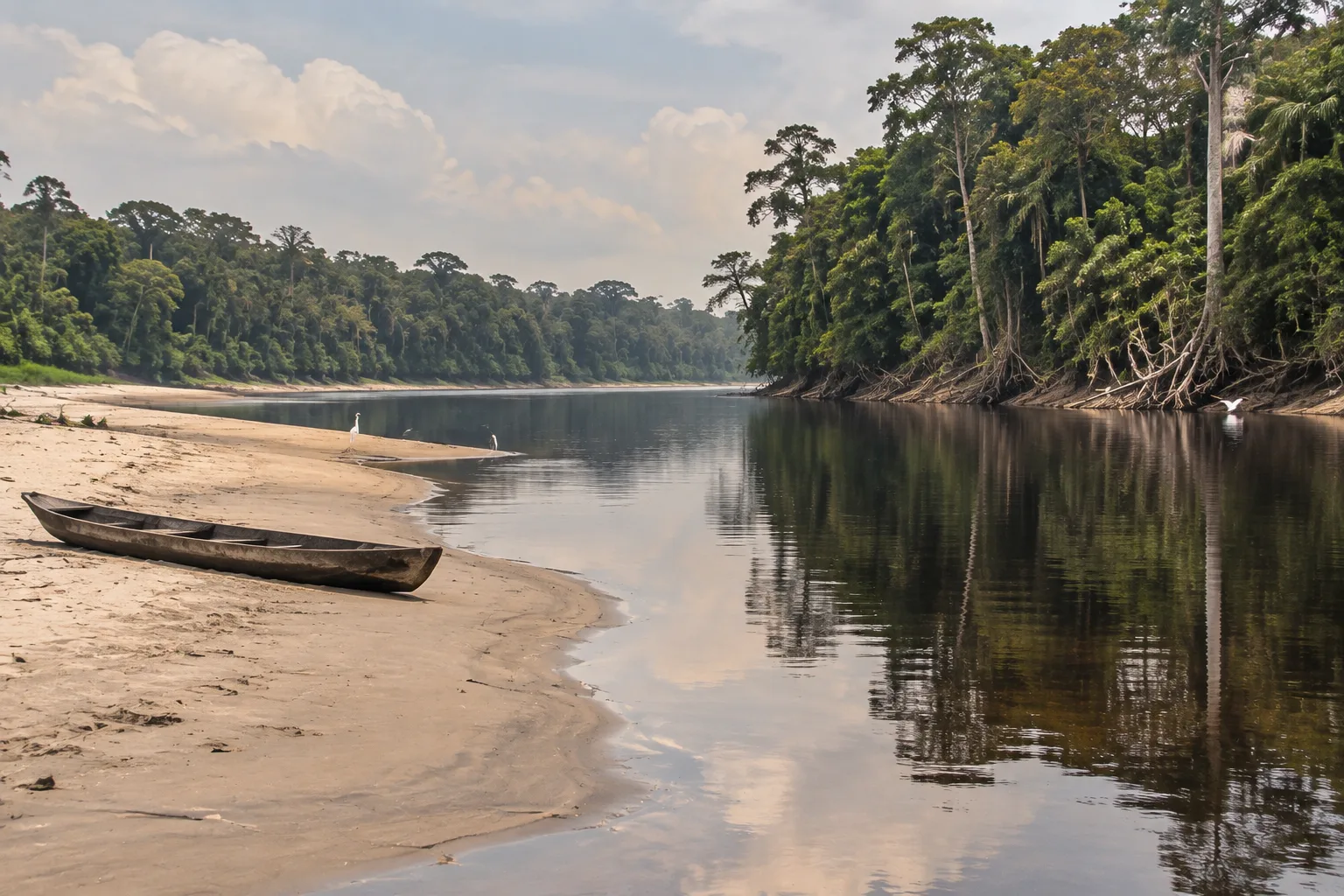
Our ayahuasca retreat center sits in the forest beyond the village. You will hear Padre Cocha in the mornings — roosters, an outboard, the school bell — and by night you will hear nothing but the river and the forest. Iquitos is a glow on the horizon, and a hospital is about forty minutes away by a route we rehearse and keep a boat for.
A real emergency chain, with a boat we own
Ten minutes to the landing, fifteen to twenty across to Bellavista-Nanay, then a short drive to the regional hospital in the same district. A launch and a boatman stay at the property every ceremony night, so the water leg never waits for a public boat.
A working village, not a set
Padre Cocha is a Kukama Kukamiria community: fishing, small farms, two schools, six artisan malocas where the potters work, and boats to the city all day. We hire from it and buy from it. We do not tour it, and it is not part of your retreat.
Vine to cup
Caapi and chacruna grow in this watershed. The brew is cut and cooked within an hour of the maloca by the maestros who serve it — nothing trucked, nothing flown in.
What we will not claim about this village
Padre Cocha was Patawu, “near” in Kukama, before the Augustinian friars who came to teach here gave it its Spanish name. The Kukama have their own traditions around plants and the river, and they are not ours to sell. Our maestros are Shipibo, from Ucayali communities further south, and they come here to work. The village knows exactly who we are, and we would rather you did too. If lineage in its own landscape matters most to you, our Pucallpa house sits in Shipibo country itself.
02 · Getting here
One flight, a short road, and fifteen to twenty minutes of river
Iquitos has no road to the rest of Peru, so everyone flies. From the terminal to the maloca is about an hour, and guests landing at midday are on the water before the afternoon rain.
Land in Lima. International arrivals connect the same day. If your flight lands late, sleep in Lima rather than chasing the last connection — the week should not start with a sprint.
The one flight. Several direct departures a day, about an hour and fifty minutes in the air. The Andes fall away and there is nothing but green and brown water for the last half hour.
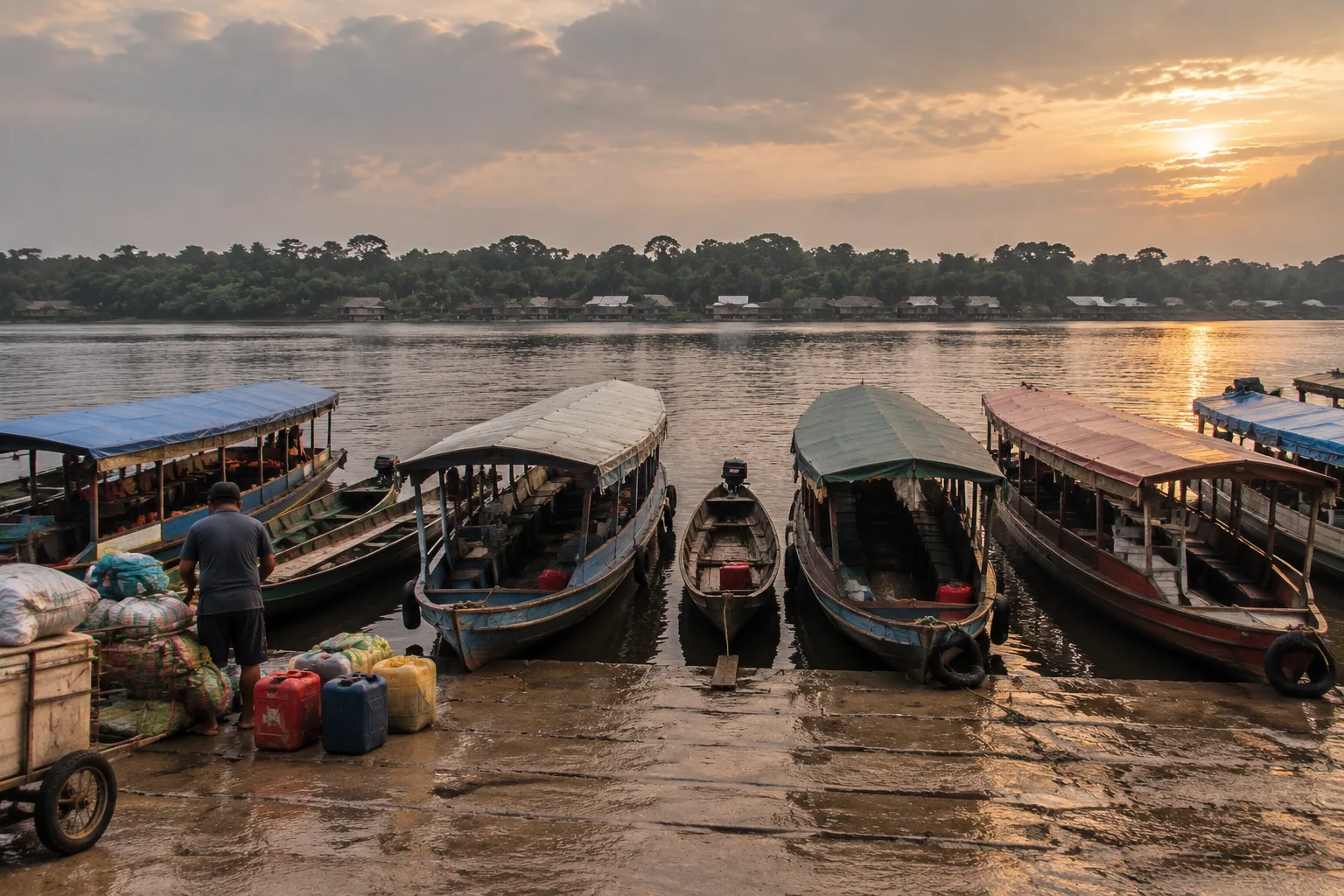
Collected at the terminal. Through the city and along Avenida La Marina to the Bellavista-Nanay port, where the launches to the north-bank villages leave from. Ours is waiting, covered, with your luggage handled.
Across and up the Nanay. Blackwater, forest on the far bank, the city sliding behind you. The village landing is a plank walkway and a bank of pulled-up canoes.
Through the village to the forest. On foot or by mototaxi along the one main path, past the school and the football pitch, to the property beyond the last houses. Intake with the physician the same evening.
No acclimatisation days needed. Nothing to adjust to but heat, so the first ceremony lands on night two, with a physician awake in the maloca until dawn.
The honest emergency numbers
About forty minutes door to hospital: ten to the landing, fifteen to twenty by our own launch to Bellavista-Nanay, and a short drive to the Hospital Regional de Loreto in Punchana, the same district as the port and the village. The Nanay is navigable in every month and the crossing is short enough to run at night. We publish this number for every house because it is the one that matters.
Three medicines, one price, two of them optional
Ayahuasca is the week at the Padre Cocha center. Kambo and Bufo are offered only to guests who are separately cleared and who ask, and neither costs extra — because charging for them would give us a reason to recommend them.
Ayahuasca
Five to six hours, dusk to dawn, twelve guests and two maestros.
A brew of caapi vine and chacruna cut within an hour of the maloca and cooked on site, drunk in the dark while the maestros sing almost continuously. Four ceremonies with rest nights between them.
Kambo
Twenty to forty minutes, fully conscious, on a rest day.
A frog secretion applied to small superficial burns on the skin. Not psychoactive, genuinely unpleasant, and always at least twenty four hours from a ceremony. We measure your water rather than loading it.
Bufo
Fifteen minutes most people cannot describe afterwards.
Synthetically sourced 5-MeO-DMT, one to one, only on the morning after the final ceremony, and only when the physician and your integration lead agree independently. Most first time guests are asked to wait.
Seven nights beyond Padre Cocha, and the first ceremony is on night two
With no altitude and about an hour of travel from the terminal, nothing about the calendar is spent recovering from the journey. The week keeps its rest days anyway — the night after a ceremony is when most guests actually make sense of it.
Arrival, and nothing else
Collected from Iquitos airport, to the Bellavista-Nanay port, across the Nanay and through the village. Intake with the physician, an introduction to your integration lead, and an early night.
A settling day, then the first ceremony
Morning on the river bank, a plant bath in the afternoon, blood pressure checked. The first ceremony runs that night from nine until first light, with a physician awake in the maloca until dawn.
Rest, deliberately empty
No screens, one meal, a conversation with your integration lead if you want one. Most guests sleep until mid morning.
The second ceremony
Usually the night guests describe afterwards. The maestros have watched you for two nights and adjust per person.
Rest, plant baths, an optional Kambo session
Kambo runs in the morning for guests who are separately cleared and asked for it. No ceremony that night.
The third ceremony
Most weeks this is the quietest one. The room knows itself and the maestros work with less noise.
The fourth ceremony, and closing
Guests frequently say this is where the previous three finally made sense. The maestros close at first light.
A slow morning, Bufo for one or two, then the launch
Bufo only where both leads agree, never on a travel morning — guests taking it stay a further night. Everyone else crosses the river to Bellavista-Nanay for an afternoon flight.
Book your flights around this, not the other way round
Arrive the day before your week begins if connections are tight, book the afternoon departure on day eight rather than the morning one, and keep the two days after you land at home completely empty.
If a center will not tell you who is singing over you, that is your answer
Shipibo maestros from Ucayali communities, a physician on site every night, and an integration lead who stays with you for a year. Everyone who touches your week at the Padre Cocha center is named here.
Maestro Rono Meni
Paoyhan, Ucayali · thirty one years in lineageOur senior maestro. Leads the first and fourth ceremonies of every week.
Maestra Sanken Bea
Nueva Betania, Ucayali · twenty six years in lineageWorks with plant baths and the dieta alongside ceremony.
Maestro Inin Soi
Paoyhan, Ucayali · nineteen years in lineageSecond maestro in most ceremonies, and the one guests tend to talk to at dawn.
Attending physician
Iquitos · internal medicineReads every application, runs intake, and stays awake through all four ceremonies. Named to you in writing before you are asked for anything.
06 · Before you get excited
Six things we would rather you knew now than after paying
It is not a treatment
We make no medical claims. Ayahuasca is not a cure for any condition, and guests who arrive expecting one tend to leave disappointed and occasionally worse.
You are beside a village
Roosters, outboards, a school bell in the mornings. The property sits in forest beyond the houses and the nights are silent, but this is a living community, not a private island.
Every emergency crosses water
About forty minutes to a hospital, with a launch we keep at the property. Guests who want the shortest chain should read our Rumococha lake house first.
The climate is the hard part
Around 31°C, humid in every month, rain without notice. Guests who struggle in heat should read our Sacred Valley house first.
You cannot come next month
Screening takes about two weeks and the dieta takes three more. If you want to sit in four weeks, we are the wrong center.
The week is a fifth of the work
Seven nights sit inside about four months. Most of what guests call the change happens at home, on integration calls, in the year after.
Padre Cocha, the lake, or the Sacred Valley
We run all of them on the same protocol, the same pay standard and the same twelve guest limit. There is no wrong answer here, only a wrong fit, and we would rather move you between houses than sell you the one you clicked on first.
| Padre Cocha · here | Rumococha · ours | Sacred Valley · ours | |
|---|---|---|---|
| Elevation | About 100 m. Sit on night two | About 100 m. Sit on night two | About 2,870 m. First cup on night three |
| Getting there | One flight, 25 minutes of road, 15–20 by launch | One flight, 25 minutes of road, a canoe crossing | Cusco, then ninety minutes of sealed road |
| Nearest hospital | About 40 minutes, with our own launch | About 35 minutes | Twenty minutes, in town |
| The medicine | Cut within an hour, cooked on site | Cut within an hour, cooked on site | Brought from the lowlands |
| The setting | Forest beyond a Kukama river village | Blackwater lake, flooded forest, no village | Andean valley, no jungle |
| The city | Across the river — a glow, not a sound | A far hum on still nights | Ninety minutes away |
| Choose it if | You want the river as a boundary and a living community nearby | You want the shortest lowland emergency chain. Read the Rumococha page | Cool air and the medical margin matter most |
08 · Price
One number, and no add-ons on arrival
$5,800 covers the whole thing, including the year afterwards. Nothing is upsold once you are here, the optional medicines cost nothing extra, and being declined for one changes nothing about what you paid.
Nothing is charged until a physician confirms your place. Payment plans run over three or six months once a place is offered. Flights and travel insurance are not included, and we recommend insurance that covers trip cancellation on medical grounds — because sometimes the medical grounds are ours.
09 · Questions
What people ask before they write
Where is Padre Cocha, and why put an ayahuasca retreat center there?
Is the retreat center in Padre Cocha itself?
How do I get to the retreat?
Do I need to acclimatise before the first ceremony?
What is a Kukama village like to stay beside?
Is the ayahuasca made locally?
Are the maestros from Padre Cocha?
How many guests, and how much does it cost?
How far is the nearest hospital?
What is the climate like?
Does ayahuasca cure depression or PTSD?
No charge to apply · reviewed within 48 hours
Ask us the four questions.
Who reads my medical file, how far is the nearest hospital, how are the healers paid, and how often do you say no. Ask us in writing, then ask everyone else you are considering. We are comfortable being compared on those answers.