Bellavista-Nanay, Punchana, Iquitos · About 100 m · Twelve guests
Ayahuasca Retreat Center In Bellavista-Nanay
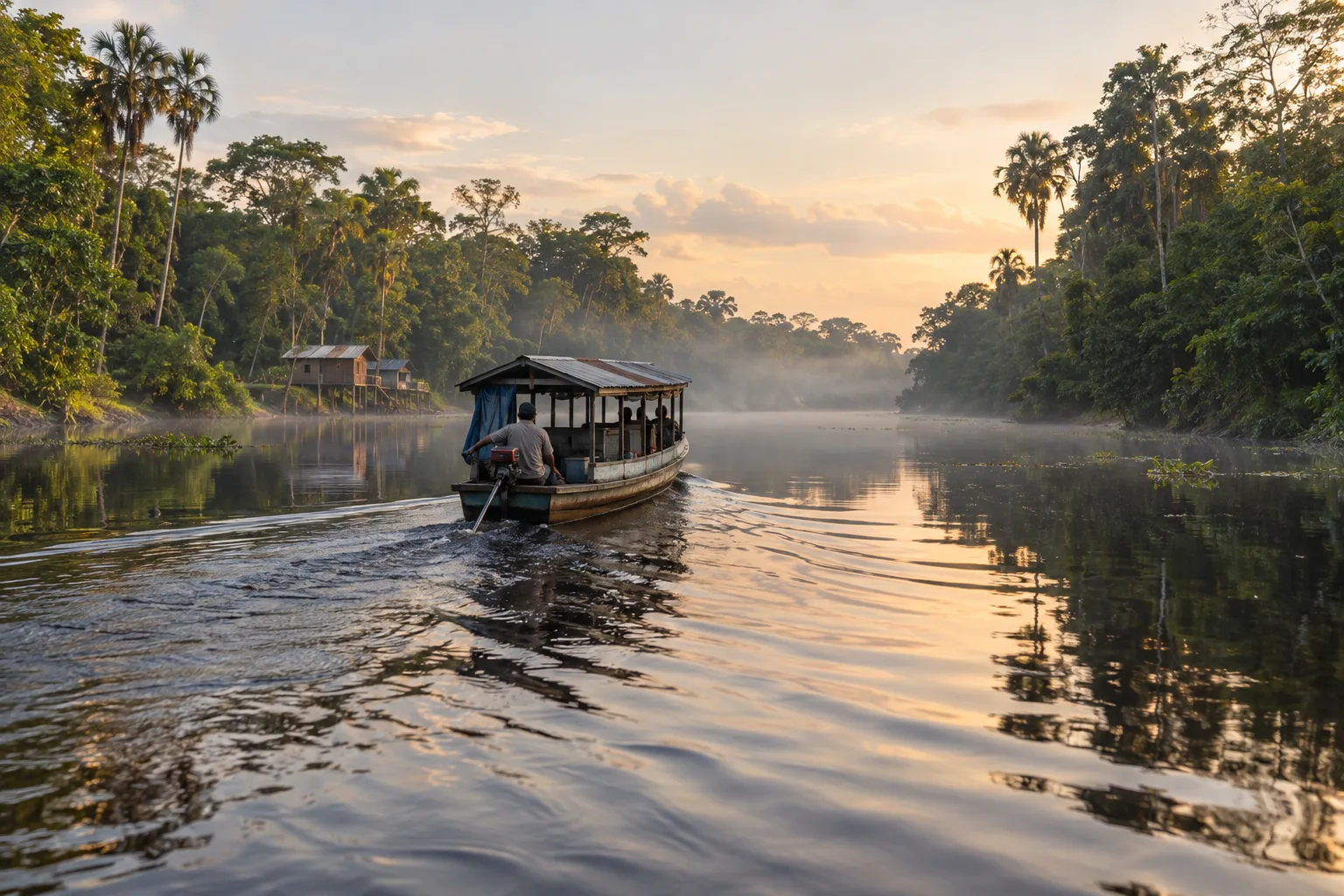
Our ayahuasca retreat center sits thirty minutes up the Nanay by covered launch from the old river port at Bellavista-Nanay, on the northern edge of Iquitos. Four ceremonies over seven nights with Shipibo maestros, a physician awake in the maloca every night, and blackwater silence with a real emergency chain behind it.
Guests per retreat, never more.
Upriver by launch from Bellavista-Nanay port.
Applications declined, with the reason in writing.
Months of integration, included in the price.
Why an ayahuasca retreat center starts at Bellavista-Nanay
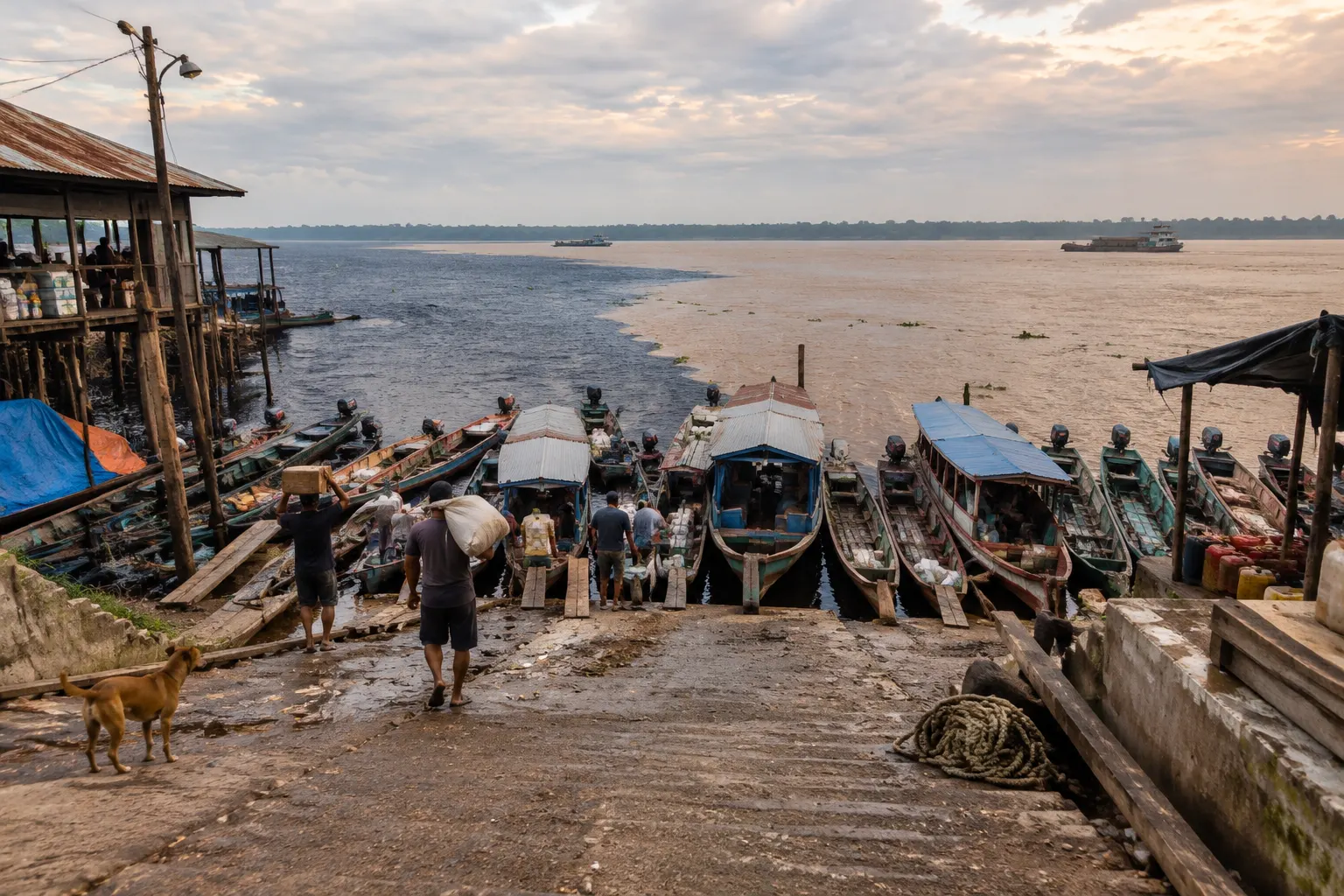
Bellavista-Nanay is the river port at the northern tip of Iquitos, in the Punchana district, where the blackwater Nanay meets the Amazon. For a century it has been the city’s gateway to the Nanay basin: the launches to Padre Cocha, Manacamiri and San Andrés leave from its ramp, the market beside it grills the morning’s catch, and from the boulevard you can watch the dark Nanay run alongside the brown Amazon before the two rivers mix.
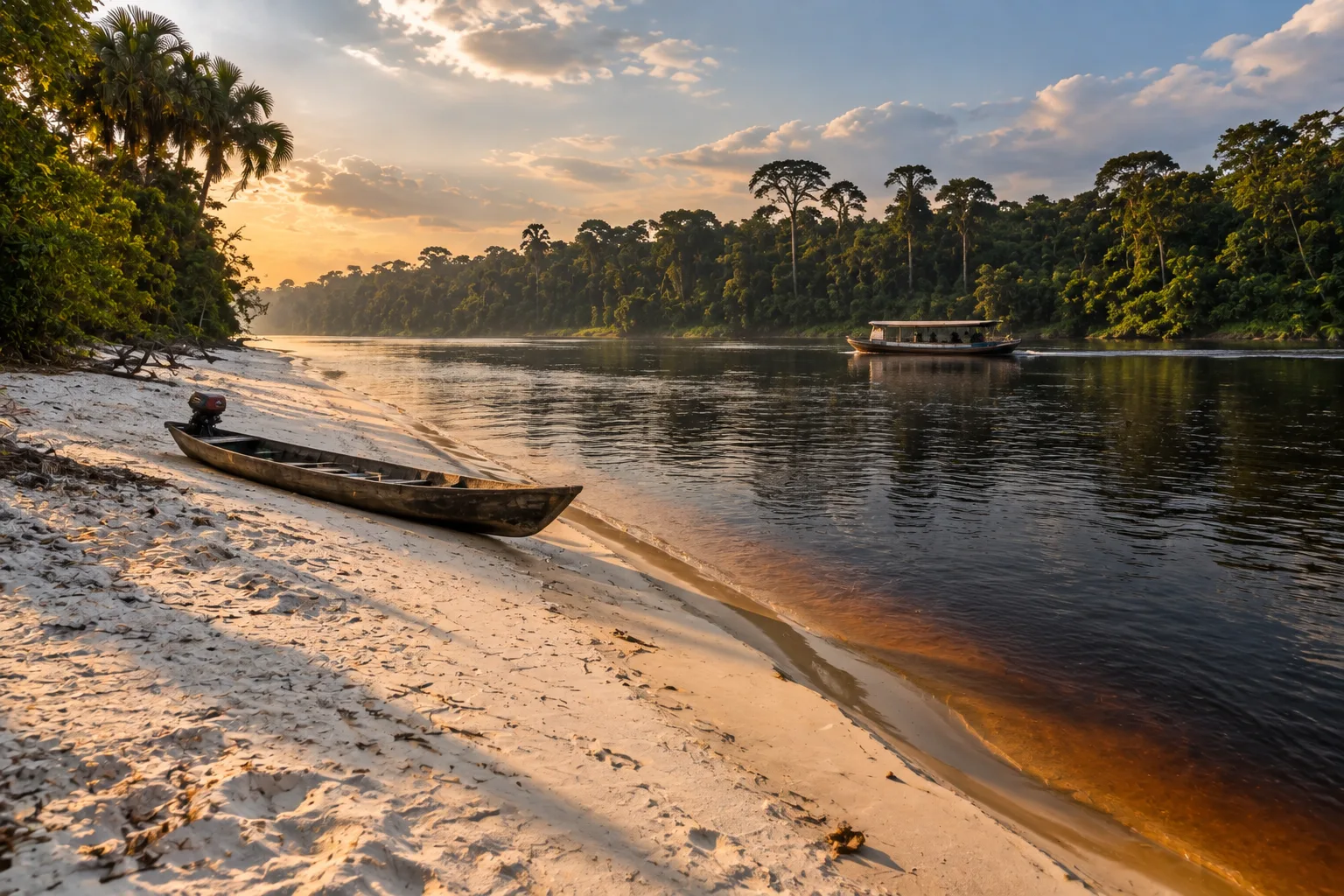
The Amazon is the highway — brown with sediment, loud with cargo boats, the river everything travels on. The Nanay is the other river: slow, stained dark with tannins, white sand on its beaches when the water is low, canoes instead of barges. Thirty minutes upstream from the port the forest closes over the water and there is no road on either bank. That is far enough for real silence at night — and near enough that the launch can have you back at the Bellavista-Nanay ramp, where a vehicle waits on call, inside half an hour.
Water that breeds almost no mosquitoes
Blackwater rivers are acidic and low in nutrients, so the insect pressure is a fraction of the whitewater Amazon’s. The screens and nets are there anyway.
A published evacuation time
Thirty minutes downriver to Bellavista-Nanay, then a short drive to the regional hospital, which sits in the same district as the port. The launch stands ready through every ceremony night. Ask any center for this number in writing.
Vine to cup
Caapi and chacruna grow in this watershed. The brew is cut and cooked within an hour of the maloca by the maestros who serve it — nothing trucked, nothing flown in.
What the river asks in exchange
Everything arrives and leaves by boat, including you. In the low water months, roughly July to October, the Nanay drops and the last stretch can mean a slower channel and a short walk to the landing. If a boat leg of any kind is a hard no for you, our Rumococha house is reached by road with only a minutes-long crossing, and we will book you there instead.
02 · Getting here
One flight, one port, thirty minutes of dark water
Iquitos has no road to the rest of Peru, so everyone flies. From the terminal to the maloca is about an hour and a quarter, and the last half hour of it is the part guests remember.
Land in Lima. International arrivals connect the same day. If your flight lands late, sleep in Lima rather than chasing the last connection — the week should not start with a sprint.
The one flight. Eight direct departures a day, about an hour and fifty minutes in the air. The Andes fall away and there is nothing but green and brown water for the last half hour.
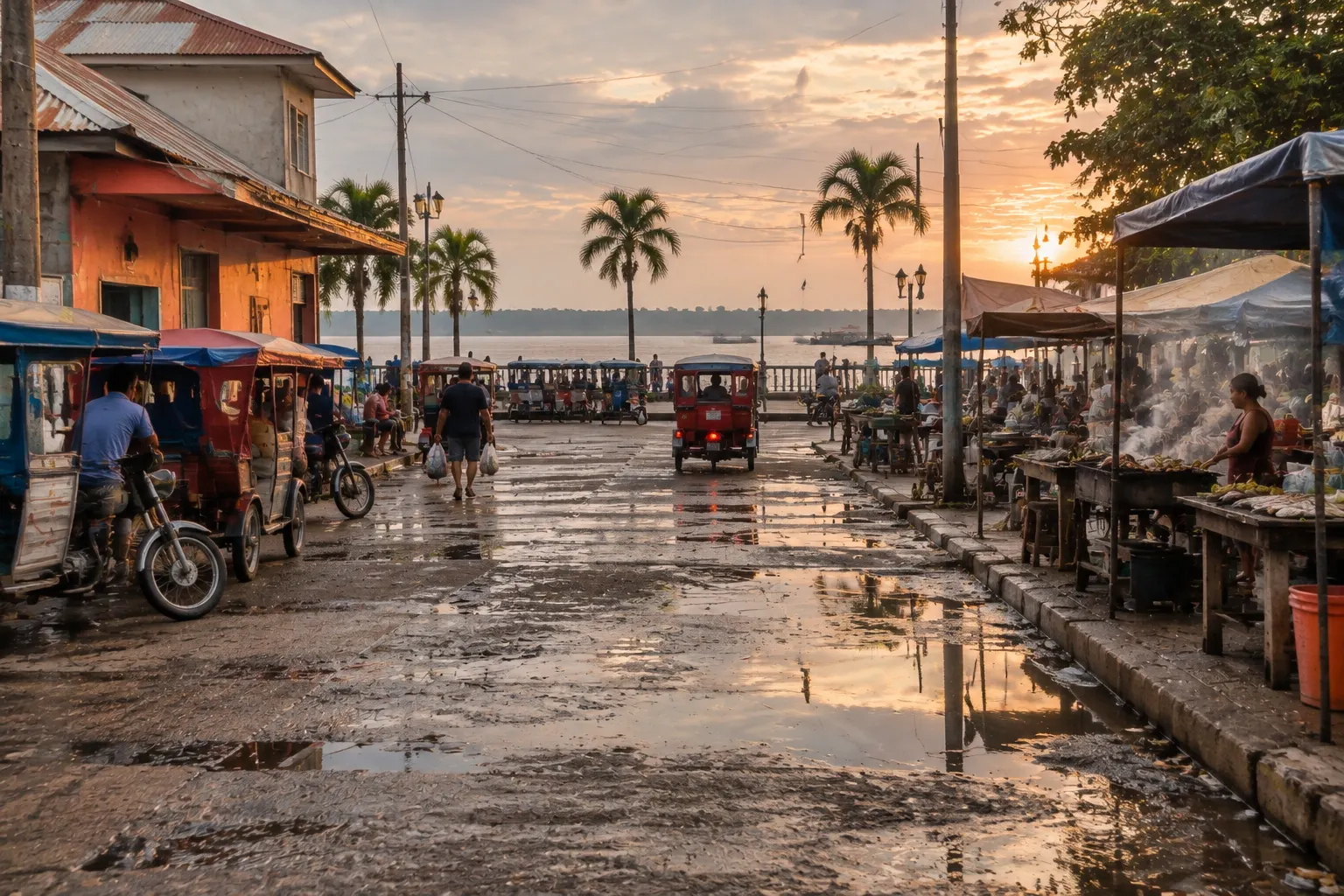
Collected at the terminal. Through Iquitos and the whole length of Avenida La Marina to the port at Bellavista-Nanay, past the boulevard and the market grills. Your bags go into the launch with you.
The covered launch upriver. The water turns black, the banks close in, and the engine is the last city sound you hear. Intake with the physician the same evening, then an early night.
No acclimatisation days needed. Nothing to adjust to but heat, so the first ceremony lands on night two, with a physician awake in the maloca until dawn.
The honest emergency numbers
Under an hour door to door on a normal night: thirty minutes downriver to Bellavista-Nanay, where a vehicle is on call day and night, then a short drive to the Hospital Regional de Loreto in Punchana — the same district as the port — in a city of nearly half a million. The launch is fuelled and crewed through every ceremony night. We publish this number for every house because it is the one that matters — and many camps further upriver are half a day from the same door.
Three medicines, one price, two of them optional
Ayahuasca is the week at the Bellavista-Nanay center. Kambo and Bufo are offered only to guests who are separately cleared and who ask, and neither costs extra — because charging for them would give us a reason to recommend them.
Ayahuasca
Five to six hours, dusk to dawn, twelve guests and two maestros.
A brew of caapi vine and chacruna cut within an hour of the maloca and cooked on site, drunk in the dark while the maestros sing almost continuously. Four ceremonies with rest nights between them.
Kambo
Twenty to forty minutes, fully conscious, on a rest day.
A frog secretion applied to small superficial burns on the skin. Not psychoactive, genuinely unpleasant, and always at least twenty four hours from a ceremony. We measure your water rather than loading it.
Bufo
Fifteen minutes most people cannot describe afterwards.
Synthetically sourced 5-MeO-DMT, one to one, only on the morning after the final ceremony, and only when the physician and your integration lead agree independently. Most first time guests are asked to wait.
Seven nights on the Nanay, and the first ceremony is on night two
With no altitude and about an hour and a quarter of travel from the terminal, nothing about the calendar is spent recovering from the journey. The week keeps its rest days anyway — the night after a ceremony is when most guests actually make sense of it.
Arrival, and nothing else
Collected from Iquitos airport, across the city to Bellavista-Nanay port, and thirty minutes up the Nanay. Intake with the physician, an introduction to your integration lead, and an early night.
A settling day, then the first ceremony
Morning on the water, a plant bath in the afternoon, blood pressure checked. The first ceremony runs that night from nine until first light, with a physician awake in the maloca until dawn.
Rest, deliberately empty
No screens, one meal, a conversation with your integration lead if you want one. Most guests sleep until mid morning.
The second ceremony
Usually the night guests describe afterwards. The maestros have watched you for two nights and adjust per person.
Rest, plant baths, an optional Kambo session
Kambo runs in the morning for guests who are separately cleared and asked for it. No ceremony that night.
The third ceremony
Most weeks this is the quietest one. The room knows itself and the maestros work with less noise.
The fourth ceremony, and closing
Guests frequently say this is where the previous three finally made sense. The maestros close at first light.
A slow morning, Bufo for one or two, then the river
Bufo only where both leads agree, never on a travel morning — guests taking it stay a further night. Everyone else takes the launch down to Bellavista-Nanay for an afternoon flight.
Book your flights around this, not the other way round
Arrive the day before your week begins if connections are tight, book the afternoon departure on day eight rather than the morning one, and keep the two days after you land at home completely empty.
If a center will not tell you who is singing over you, that is your answer
Shipibo maestros from Ucayali communities, a physician on site every night, and an integration lead who stays with you for a year. Everyone who touches your week at the Bellavista-Nanay center is named here.
Maestro Rono Meni
Paoyhan, Ucayali · thirty one years in lineageOur senior maestro. Leads the first and fourth ceremonies of every week.
Maestra Sanken Bea
Nueva Betania, Ucayali · twenty six years in lineageWorks with plant baths and the dieta alongside ceremony.
Maestro Inin Soi
Paoyhan, Ucayali · nineteen years in lineageSecond maestro in most ceremonies, and the one guests tend to talk to at dawn.
Attending physician
Iquitos · internal medicineReads every application, runs intake, and stays awake through all four ceremonies. Named to you in writing before you are asked for anything.
06 · Before you get excited
Six things we would rather you knew now than after paying
It is not a treatment
We make no medical claims. Ayahuasca is not a cure for any condition, and guests who arrive expecting one tend to leave disappointed and occasionally worse.
Everything moves by boat
Including you, your luggage, and in an emergency, the evacuation. The launch is crewed through every ceremony night, and the number is under an hour, not minutes.
The river has seasons
From about July to October the Nanay drops; the last stretch can mean a slower channel and a short walk to the landing. We tell you before you book, not at the ramp.
The climate is the hard part
Around 31°C, humid in every month, rain without notice. Guests who struggle in heat should read our Sacred Valley house first.
You cannot come next month
Screening takes about two weeks and the dieta takes three more. If you want to sit in four weeks, we are the wrong center.
The week is a fifth of the work
Seven nights sit inside about four months. Most of what guests call the change happens at home, on integration calls, in the year after.
The Nanay above Bellavista-Nanay, the lake, or deep upriver
Around Iquitos the real choice is how far from the city to sit. We run the lake and the river; the deep camps we do not, and we will still tell you honestly what they trade.
| Nanay river · here | Rumococha lake · ours | Typical deep upriver camp | |
|---|---|---|---|
| From the airport | About an hour and a quarter: road to Bellavista-Nanay port, thirty minutes by launch | About half an hour: road, then a minutes-long crossing | Half a day or more on the water |
| Nearest hospital | Under an hour, launch on standby all night | About 35 minutes | Often half a day. Ask for it in writing |
| Silence at night | Full river silence — no road, no city hum | Forest quiet; the far city audible on still nights | Total |
| The medicine | Cut within an hour, cooked on site | Cut within an hour, cooked on site | Usually local, worth asking |
| Insects | Blackwater — low mosquito pressure, screened anyway | Blackwater lake, similar | Depends on the river; whitewater is worse |
| Choose it if | You want real river silence with a chain under an hour | You want the shortest possible emergency chain | Total remoteness outweighs everything else |
08 · Price
One number, and no add-ons on arrival
$5,800 covers the whole thing, including the year afterwards. Nothing is upsold once you are here, the optional medicines cost nothing extra, and being declined for one changes nothing about what you paid.
Nothing is charged until a physician confirms your place. Payment plans run over three or six months once a place is offered. Flights and travel insurance are not included, and we recommend insurance that covers trip cancellation on medical grounds — because sometimes the medical grounds are ours.
09 · Questions
What people ask before they write
Where is Bellavista-Nanay, and why put an ayahuasca retreat center there?
Is the retreat center in Bellavista-Nanay itself?
How do I get to the retreat?
Do I need to acclimatise before the first ceremony?
Why the Nanay rather than the Amazon itself?
Is the ayahuasca made locally?
How many guests, and how much does it cost?
How far is the nearest hospital?
What is the climate like?
Why choose the Nanay over a lake site or a deep upriver camp?
Does ayahuasca cure depression or PTSD?
No charge to apply · reviewed within 48 hours
Ask us the four questions.
Who reads my medical file, how far is the nearest hospital, how are the healers paid, and how often do you say no. Ask us in writing, then ask everyone else you are considering. We are comfortable being compared on those answers.